

Tumacacori National Historical Park
⚰️ History & Backstory
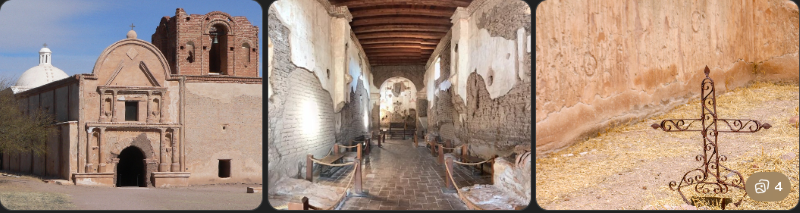
Tumacácori National Historical Park preserves the ruins of three Spanish colonial missions: Tumacácori, Los Santos Ángeles de Guevavi, and San Cayetano de Calabazas. Established in the late 1600s by Jesuit missionaries, the site became part of Spain’s northern frontier expansion into what is now southern Arizona.
The most prominent structure, Mission San José de Tumacácori, was constructed in the early 1800s under Franciscan leadership after Spain expelled the Jesuits in 1767. The mission served the O’odham people, aiming to convert and settle them into agricultural and Christian lifestyles.
However, life at Tumacácori was difficult. The community endured Apache raids, disease, and political instability as Mexico gained independence from Spain in 1821. By 1848, after decades of hardship, the mission was abandoned. Over time, the adobe church fell into ruin, preserved today as a haunting relic of colonial ambition and cultural conflict.
The site became a National Monument in 1908, later redesignated as a National Historical Park.
👁 Known Sightings & Activity
Tumacácori is widely regarded as one of Arizona’s most atmospheric historic sites, and many visitors and staff have reported unexplained phenomena:
Shadow Figures in the Church: Visitors have described seeing shadowy silhouettes moving across the interior walls of the mission church, especially near the altar. These figures often vanish when approached.
Disembodied Voices: Reports include faint chanting, whispers in Spanish or Indigenous languages, and the sound of prayer echoing through empty rooms—particularly during quiet afternoons or near closing time.
Cold Spots & Sudden Temperature Drops: Even in Arizona’s desert heat, certain areas inside the church and surrounding grounds reportedly become unnaturally cold without explanation.
Cemetery Activity: The mission cemetery is a focal point of paranormal claims. Visitors have reported hearing footsteps behind them, feeling watched, and seeing apparitions near the graves—especially at dusk.
Residual Energy: Some paranormal investigators believe the site holds “residual hauntings,” where emotional or traumatic events from the mission’s past replay as energy imprints rather than intelligent spirits.